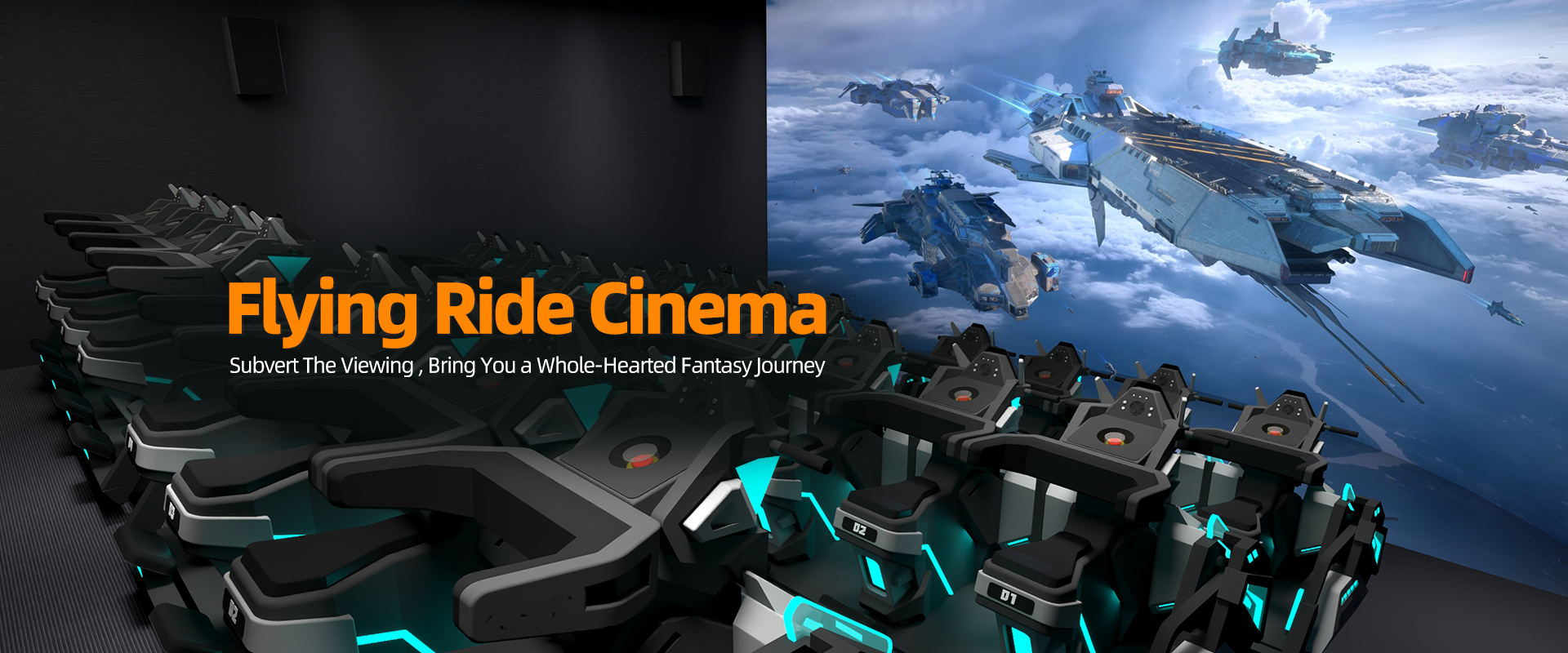
Flying Cinemas: Content, Platforms, and ROI Strategies
In the rapidly evolving Location-Based Entertainment (LBE) and Cultural Tourism markets, Flying Cinemas have emerged as one of the most high-demand VR investments. Launching a successful project requires more than just buying equipment. It demands a deep dive into content sourcing and motion platform technology. Additionally, you must carefully manage project timelines and throughput capacity to ensure success.
Based on industry data and expert insights, this guide addresses the four core questions every entrepreneur must answer before investing in a Flying Cinema.
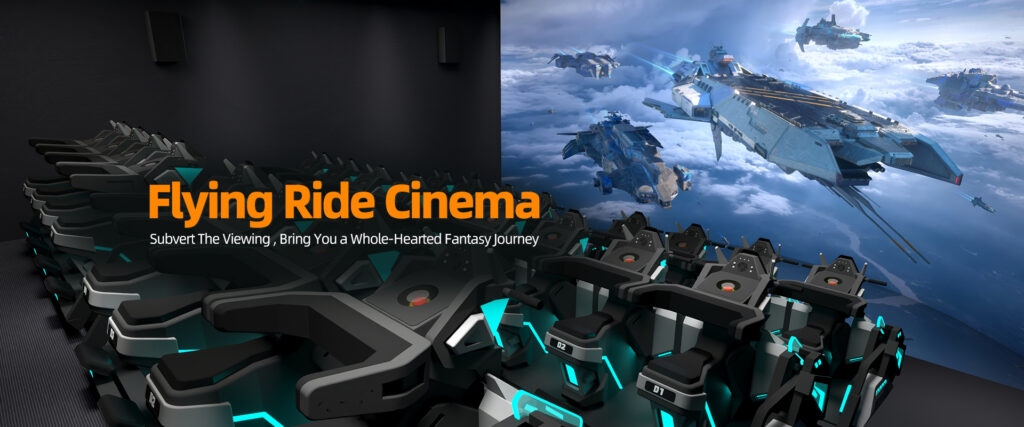
1. Content Sourcing: Should You Buy Off-the-Shelf or Go Custom?
The “soul” of any Flying Cinema is its content. Generally, content falls into two categories:
Stock Content: Pre-made, universal themes that are ready for immediate licensing. These are cost-effective but lack exclusivity.
Custom Content: Tailor-made films—from script and storyboarding to final rendering—designed specifically for your brand.
Why Customization Wins: Leading providers like MoviePower often recommend custom content for cultural tourism sites. Custom films allow you to integrate local landmarks, history, or unique IP (Intellectual Property). This prevents the “homogeneity trap” where your attraction looks exactly like a competitor’s. By avoiding this overlap, you can build a unique brand identity that drives repeat foot traffic.
2. Choosing Your Motion Platform: 3-DOF vs. 6-DOF
The “Degrees of Freedom” (DOF) determine how realistically the platform mimics flight. Choosing the right one is a balance between budget and immersion.
| Feature | 3-DOF Platform | 6-DOF Platform |
|---|---|---|
| Movement | Heave (up/down), Pitch (tilt forward/back), Roll (side to side). | Includes 3-DOF movements plus Surge, Sway, and Yaw (complex rotations). |
| Experience | Smooth, basic flight simulation. | High-intensity, ultra-immersive (spirals, dives, sharp turns). |
| Best For | Early-stage startups or budget-conscious venues. | High-end theme parks, science centers, and "wow-factor" hubs. |
| Complexity | Simple maintenance, lower cost. | Higher technical complexity and investment. |
Pro Tip: MoviePower’s Glasses-free 5D/7D Flying Cinema utilizes 6-DOF technology. Beyond just movement, it incorporates environmental effects such as wind, rain, and mist. These additions create a multi-sensory experience that standard 3-DOF systems simply cannot match.
3. Project Timeline: From Contract to Grand Opening
A Flying Cinema is a complex integration of hardware and software. Generally, the transition from signing a contract to your first customer takes 5 to 7 months.
The Phase-by-Phase Breakdown:
Consultation & Contract (approx. 7 Days): Finalizing specifications and site requirements.
Manufacturing (2-3 Months): Specialized production of the motion platforms and audiovisual systems.
Installation & Testing (1-2 Months): On-site setup.
Note: Modular designs (like those from MoviePower) can reduce this phase to as little as 30 days.
Content Adaptation (approx. 1 Month): Syncing the motion seats with the film’s choreography to ensure a seamless experience.
4. Understanding Capacity: Throughput and Revenue Projections
Your ROI (Return on Investment) depends entirely on your hourly (reception capacity).
Using a standard high-end Flying Cinema setup as a benchmark:
Capacity per Session: ~8 people.
Hourly Throughput: ~50 people.
ROI Calculation Example:
If your venue operates for 8 hours a day during a peak season:
Daily Capacity: 400 visitors.
Pricing Strategy: In a high-traffic cultural tourism spot, the Flying Cinema can account for a substantial 10% of total site revenue. Pricing these tickets at a competitive premium ensures a significantly faster break-even point for the investment.
The Strategy for Success: Entrepreneurs should forecast their target traffic before choosing equipment. If your site expects 10,000 daily visitors, you may need multiple units or a higher-capacity configuration to meet demand without creating frustrated queues.
Final Thoughts for Entrepreneurs
The Flying Cinema is a cornerstone of modern VR tourism. However, the hardware is only half the battle. To ensure a successful venture:
Conduct Field Research: Personally experience the difference between 3-DOF and 6-DOF.
Vet Your Manufacturers: Look for partners who offer modular installation and custom content support.
Analyze the Data: Don’t just buy the “coolest” tech—buy the tech that matches your projected visitor volume.
By focusing on high-quality content and the right degree of immersion, your Flying Cinema can become the “must-visit” attraction of any venue.